
Music Monday's originated at The Tattooed Book Geek's fantastic blog and has shown up hither, thither, and yon since then.
This is allyson johnson’s fault(?)–haven’t been able to get this out of my head since her comment last week.


Music Monday's originated at The Tattooed Book Geek's fantastic blog and has shown up hither, thither, and yon since then.
This is allyson johnson’s fault(?)–haven’t been able to get this out of my head since her comment last week.
Fantasy with Friends is a weekly meme hosted by the good people over at Pages Unbound. Fantasy with Friends poses questions each Monday about fantasy, either as a genre as a whole or individual works.
This week’s prompt is:
I don’t know enough about Magical Realism to really answer this. From what I’ve read, the major writers in the genre/literary movement would say no. That’s not what it’s about. And I’m fine with that.
But every time I’ve read it–or something like it–it feels like a very restrained fantasy novel/story dressed up as the kind of literature that you can hear the capital “l” when you speak of it.
I guess one of the big ways that I personally categorize things as “magical realism” (guided by some things I’ve read) is that the magic really isn’t acknowledged as such, or defined as anything out of the ordinary. It’s just a thing that happens and characters roll with it. The magic also tends to be on the smaller, or at least subtle, side–at least for most of the novel/story, and then it might break forth into something bigger or dramatic.
The first time I encountered Magical Realism was in The Milagro Beanfield War–and I remember almost nothing about the book or film, and given how popular it was in my household growing up, that rather bothers me (please, no one tell my father). But I do vaguely remember how when the possible magic stuff happened how unremarked upon it was (at least by most characters). While in Like Water for Chocolate it was acknowledged, but it was just seen as part of life–just a thing that happens sometimes.
In Fantasy, you might get some people treating magic that way, but there will be those who won’t, too. Maybe that’s the easiest tell.
Do I enjoy reading it? Yes. Do I seek it out? No. Should I try to? Probably. I can think of three works that fit the description that I’ve written about here. One of the best novels I’ve read for this blog is Tiffany McDaniels’ The Summer That Melted Everything (maybe some of her other books fit that, too–although her MG books are flat out Fantasy), there might be more. Just the three works I’ve mentioned in this post tell me that I should do a better job of reading them (and that I need to re-read those I’ve mentioned, particularly John Nichols’ book).
So, at the end of the day, this is something I’ve only dabbled in. You’ll want to read the other posts linked to in the Pages Unbound post (as well as that post itself)..
I’m very pleased today to welcome The BBNYA 2026 Semi-Finalist Spotlight Tour for Alexander Verbeek-van den Toren’s Corruption! This book made it to the semi-finals, so you know there’s something good going on–but before getting to this Spotlight, let’s start with a word about BBNYA.
BBNYA is a yearly competition where book bloggers from all over the world read and score books written by indie authors, ending with 15 finalists (18 in 2026) and one overall winner.
If you want some more information about BBNYA, check out the BBNYA Website https://www.bbnya.com/ or take a peek over on Twitter @BBNYA_Official.

Title: Corruption by Alexander by Verbeek-van den Toren
Genre: Fantasy, Romance
Age Category: Young Adult
Format: Paperback, eBook
Length: 203 pg.
Publication Date: January 13, 2026
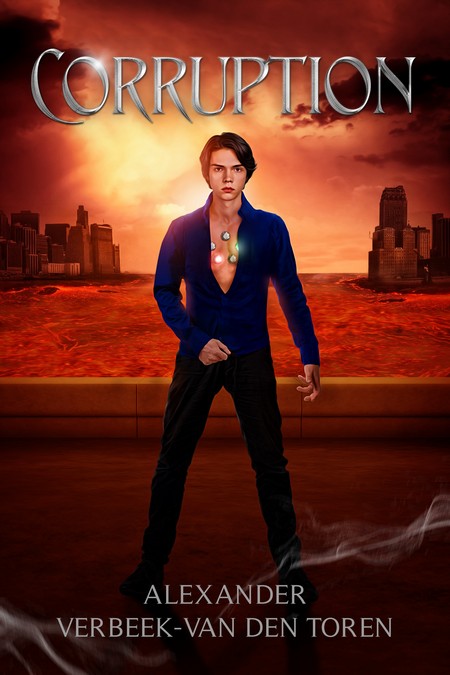
When their ability to connect to the magical Flow disappears, Revan and the other students at his college’s island are stranded, surrounded by fiery seas separating habitable regions. Revan can’t retreat to his home island, only in contact with people who don’t know his true identity.
While most people only have one of the five crystals in their torso lit up, determining their role in society, Revan is among the few with more than one lit-up crystal. If anyone find out, he’ll be considered Othercrystalled, and cast from society.
Torn between his feelings for his male best friend and a female classmate, with his secret close to being revealed, Revan discovers evidence the magic might not have been cut off naturally. Someone might be using the chaos to hunt Othercrystalled. Someone full of Corruption.
What is the opening line? Revan could no longer form a gate with his magic.
What’s a fun fact about the book? I wrote this book after writing a fantasy novel where the worldbuilding felt too earthly. So in this I was like, let’s throw in ALLLLL the weirdness I can imagine.
What food or drink pairs best with the book? I think a soda would be nice! And some pizza, perhaps. Pretzels could also work well.
What music pairs best with the book? Queer songs would probably do well. Think It’s A Sin, or Smalltown Boy.
Amazon Canada ~ Amazon US ~ Amazon UK ~ Bookshop.org ~ Goodreads ~ The Story Graph

Alexander Verbeek-van den Toren is a Dutch writer who enjoys queer books and strange cultures, preferably even together, and loves both writing and reading about them. Alexander writes both in Dutch and in English; in English his debut novel ‘Corruption’ came out this year, in Dutch he regularly appears in collections and magazines with his short stories. Apart from writing Alexander is a child psychologist. He lives in Spijkenisse, near Rotterdam, together with his husband and their dog.
My thanks to The Book Bloggers’ Novel of the Year Award for the invitation to participate in this tour and the materials they provided.
I’m very pleased today to welcome The BBNYA 2026 Semi-Finalist Spotlight Tour for Clipped by KQ Watson’s Clipped! This book made it to the semi-finals, so you know there’s something good going on–but before getting to this Spotlight, let’s start with a word about BBNYA.
BBNYA is a yearly competition where book bloggers from all over the world read and score books written by indie authors, ending with 15 finalists (18 in 2026) and one overall winner.
If you want some more information about BBNYA, check out the BBNYA Website https://www.bbnya.com/ or take a peek over on Twitter @BBNYA_Official.
Title: Clipped by KQ Watson
Genre: Science Fiction, Dystopian
Age Category: Adult
Format: Paperback, eBook
Length: 352 pg.
Publication Date: May 31, 2025
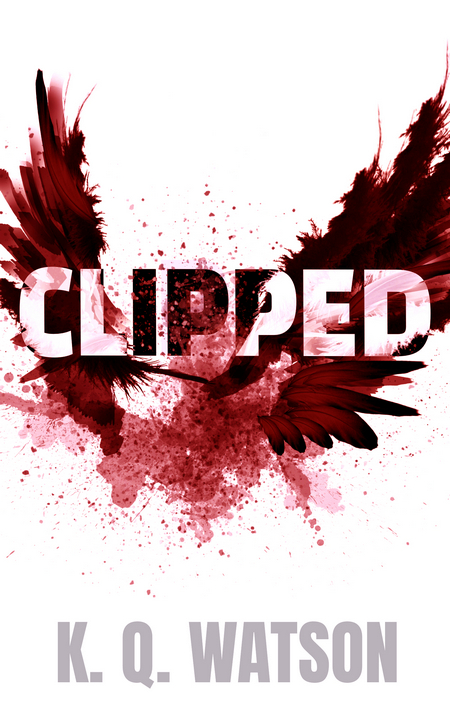
Heaven was perfect, until they came for his son.
When angel engineer Zak’s infant son is cast down for being born without wings, he faces Heaven’s cruel mandate: forget, or fall. Clipped, Zak plummets to a broken Earth, where false prophets exploit the faithful, drug lords rule dead cities, and every truth comes with a price.
Pursued by ruthless angel hunters through decaying urban wastelands and corrupted mega-churches, Zak uncovers a conspiracy that reaches from Earth’s grimmest gutters to Heaven’s highest chambers. What begins as a father’s desperate search becomes a brutal quest for vengeance that will expose Heaven’s most devastating lies… and make them remember his son’s name.
What is the opening line? It’s not too late to repent. You know that, don’t you?
What’s a fun fact about the book? I am an amputee, several characters in my book are also amputees. For all intents and purposes, I consider the protagonist an amputee since his wings were cut from his back.
What food or drink pairs best with the book? Food and drink is actually very important in the novel. There are so many possible answers to this question. I think I’m going to say a nice steak, chocolate mousse for dessert and a cheap rum and coke.
What music pairs best with the book? There is a playlist at the front of the book. My unofficial theme songs in my mind are Supertramp – Logical Song, XTC – Dear God, and A Perfect Circle – Talktalk
Amazon Canada ~ Amazon US ~ Amazon UK ~ Goodreads ~ The Story Graph
KQ Watson is the cyborg that you don’t take home to meet your parents. She looks innocuous and gentle, but there are oodles of satanic death metal songs continually playing in her head. Sometimes, when she’s all alone, she thinks back to some of her favourite episodes of Intervention and the best scenes from The People Under the Stairs.
She writes because what else is she going to do, let’s be real here.
One legged Canadian who likes The Dark Crystal more than she will ever like you.
The characters in her head keep her sane.
My thanks to The Book Bloggers’ Novel of the Year Award for the invitation to participate in this tour and the materials they provided.
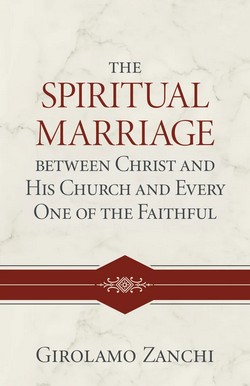 The Spiritual Marriage between Christ and His Church and Every One of the Faithful
by Girolamo Zanchi, translated by Patrick J. O’Banion
DETAILS:
Publisher: Reformation Heritage Books
Publication Date: November 27, 2021
Format: eBook
Length: 150 pg.
Read Date: October 25, 2026

This is an excurses from Zanchi’s commentary on the book of Ephesians, the only part published during his life (the Translator’s introduction suggests there’s no known reason why this was the part he published). In it, Zanchi sets out to explain the benefits of salvation in Christ through the idea of spiritual marriage.
Whatever is conveyed in various passages of Holy Scripture concerning the church’s origin and her spiritual marriage with the Son of God, the apostle deduces, explains, and confirms from the first creation of humankind, as from a fountain of the mysteries of Christ, when, in the epistle to the Ephesians, chapter 5, he says, “Husbands, love your wives even as Christ loved the church” [v. 25], and so forth.
He does this, primarily, by looking at what Genesis 2 teaches about human marriage (he uses the term “carnal,” without any negative connotations, merely to distinguish from “spiritual”) and then applies that to the marriage between Christ and his Church. And then makes a few applications to human marriage from that, too. But his overwhelming concern is not human marriage—seeming to hold that Western culture has the essence of that down (while noting some areas it could be improved), but that Christians are missing out on the idea of the Spiritual Marriage.
He also uses this to address some problematic Protestant ideas (and one or two Roman Catholic notions)—primarily those of Gnesio-Lutherans (unnamed in the text itself, but the Introduction will prepare the reader to see it).
First off, this is written in a series of theses—not all of which are that thoroughly worked out. But they’re given enough that you don’t need him to turn every 2-5 sentence paragraph into several paragraphs (although there are more than enough theses that do get a multi-paragraph explanation).
Secondly, Zanchi is incredibly Aristotelian in his approach—both in language and the way he breaks down each topic.
The book covers the topic like this:
Chapter One: The Creation of Eve and Her Marriage to Adam
Chapter Two: The Doctrine of Carnal Marriage
Chapter Three: The Doctrine of Spiritual Marriage
Chapter Four: The Final Causes of the Spiritual Union
Chapter Five: The Duties of the Husband and of the Wife
The final chapter being a mix of applications for the believer in relation to the Church as well as to their own spouse.
I expected this to be a thornier work than it is, expecting to spend a couple of weeks on it, rather than one long afternoon. The use of thesis rather than intricate arguments help with that. But also, Zanchi isn’t going for intricate—he has his points to make and he does so. This doesn’t mean he avoids subtlety, or small ideas—he just deals with them in a direct manner.
The Translator’s Introduction says that Zanchi wasn’t an original thinker—you get no new ideas here. Several that I’ve read before (even without the patristic sources he looks to)—and that’s nice. I’m not saying some original thought would’ve been out of place, but just encapsulating a lot of thought into an easily digestible book is just as valuable sometimes.
I really appreciated the way he made his argument and explained things—some of the language about spousal relations and duties may be off-putting to contemporary readers, but in the historical context of the work—and the Christ-like nature of husbands that he assumes/calls for, it shouldn’t.
This isn’t a work that will shake anyone’s understanding of anything—but I do think his use of the Spiritual Marriage between Christ and His Church will be helpful to understand the nature of salvation and the benefits from it. At least it should serve to refresh one’s understanding and see it in a fresh light.
It’s a helpful work, and a good introduction to a Reformer I’ve seen referenced plenty but had never read before.
This post contains an affiliate link. If you purchase from it, I will get a small commission at no additional cost to you. As always, the opinions expressed are my own.
Odds ‘n ends about books and reading that caught my eye this week. You’ve probably seen some/most/all of them, but just in case:
 Is a Bad Jane Austen Adaptation a Victimless Crime?—Some really good thoughts on adaptations in general here
Are We in a Reading Monoculture?—seems to be hot article this week.
The 2026 Shamus Award Winners—a couple of favorites got some laurels this week—including well-deserved award for friend of the blog, Nick Kolakowski
A World That Feels Lived In 500 Years From Now: An interview with Thomas Trang about the Asteroid Savage trilogy of novels—a trilogy I will definately try to finish this year (book was was great!)
SPFBO Finalist Sale 2026—50+ ebooks from award-nominated authors on sale for $2.99 or less, throug the 26th.
Is Everyone Reading the Same Thing? (And Is That Even New?)—Briana at Pages Unbound finds the Elle article above less than convincing.
Why Adults Love Young Adult Fiction—yeah, this is a year-and-a-half old, but I just came across it. (somehow, I don’t remember where)
7 Bookish Pet Peeves
My favorite sentence/passage/phrase (or two) that I read this week:
“It’s the job of fourteen-year-olds not to be great at things, the only expectation they have to live up to is to be morons, they’re put on this earth so their moms and dads will support the headache-pill industry. It really, really isn’t the job of fourteen-year-olds to be geniuses.”—My Friends by Fredrik Bachman
To help talk about backlist titles (and just for fun), What Was I Talking About 10 Years Ago This Week?
John Bunyan and the Grace of Fearing God by Joel R. Beeke and Paul M. Smalley
Operation Cure Boredom by Dan Martin
Elphie Goes Trick or Treating by Hagit R. Oron, Or Oron
This Damned Band by Paul Cornell and Tony Parker
Madam Tulip and the Knave of Hearts by David Ahern
Raining Embers by Jessica Dall
Before the Fall (Audiobook) by Noah Hawley, Robert Petkoff
This Week’s New Releases that I’m Excited About and/or You’ll Probably See Here Soon:
The Key to a Killer by Olivia Blacke—”A woman and her ghost roommate investigate their most personal case yet.” I talked about is recently.
Mortality Gauntlet by JCM Berne—It’s Rohan vs. Hyperion again, will it be the last time? Find out in the ninth of the series.
Split Screen by Lee Goldberg—”When Erin Casey, the actress who plays LASD detective Eve Ronin on TV, is gunned down after a ride-along, the intended target is obvious: the real Eve. What isn’t obvious is why.”
The Christmas Carol Killer by Chris Frost—”It’s December and Durham is bustling with shoppers and visitors, as carollers fill the air with festive cheer – until a chilling murder shatters the peace. Retired teacher Alistair Morley is found dead, sheet music crammed down his throat, while The Coventry Carol plays in the background. DI Tom Stonem is called and soon thrust into a sinister investigation that reveals Morley was formerly choirmaster at the now-closed St. Bartholomew’s Academy.”
Letters to Our Sons collected by Stephen Graham with Orly Klein—”Featuring letters from Olympian Tom Daley, actors Javier Bardem and Riz Ahmed, and documentarian Louis Theroux, as well as other fathers from all walks of life, this raw collection of advice, anecdotes, regrets, and joys, offers a powerful and inspiring look at father-son relationships and the true value of healthy masculinity.”
Goblin Market by A. J. Hackwith—”A goblin changeling caught between the human and fey worlds must find a way to save her home in this warm and heartfelt fantasy.”
Devil’s Advocate: The Anti-Divine Comedy by Amanda DeWitt—”The Devil went down to Georgia—and started a media conglomerate. Ada Faust’s dad isn’t just kind of an asshole, he’s the Devil himself, and he’s been bringing about the end of days for millennia. But even the Devil must adapt to thrive, and nothing will look better for the bottom line than if oil-executive-turned-politician Nelson Campbell wins the US Presidency. In fact, the world will get so apocalyptically bad that the Devil can retire and appoint one of his heirs to take over as Antichrist.”
Ebenezer Scrooge: Ghost Hunter by J. S. Barnes—This is either a gread idea or one of the worst of the year, “Seven years have passed since the events of A Christmas Carol, seven years since the night when Ebenezer Scrooge took to a life of philanthropy and kindness. But there is another side to Scrooge. Those afflicted by spirits and hauntings know of him as a man who can help rid them of the unquiet dead. Alongside his trusted companion and friend, Captain Ambrose, Scrooge faces off against malevolent poltergeists and supernatural wickedness.”
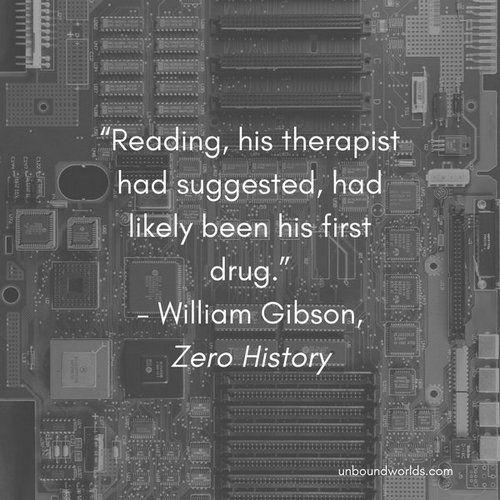
image source: @PRHSciFiFantasy on Twitter
I’m very pleased today to welcome The BBNYA 2026 Semi-Finalist Spotlight Tour for Ashley N.Y. Sheesley’s Child of the Dragon! This book made it to the semi-finals, so you know there’s something good going on–but before getting to this Spotlight, let’s start with a word about BBNYA.
BBNYA is a yearly competition where book bloggers from all over the world read and score books written by indie authors, ending with 15 finalists (18 in 2026) and one overall winner.
If you want some more information about BBNYA, check out the BBNYA Website https://www.bbnya.com/ or take a peek over on Twitter @BBNYA_Official.
Title: Child of the Dragon by Ashley N.Y. Sheesley
Series: Pact of the Ancients
Genre: Fantasy, Contemporary Fiction
Age Category: Young Adult
Format: Paperback, eBook
Length: 435 pg.
Publication Date: March 10, 2026
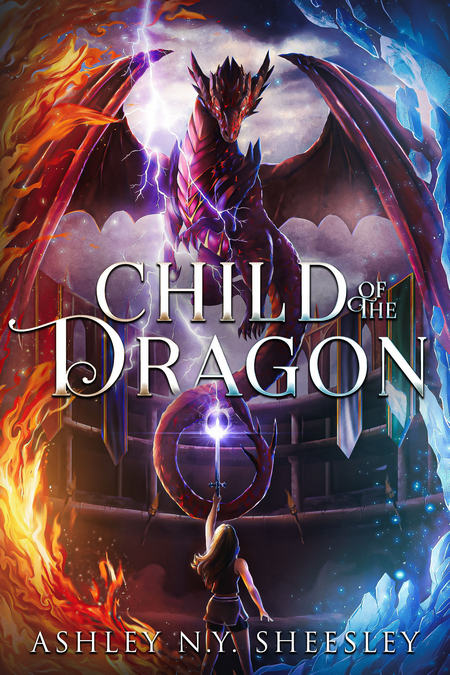
Our only hope is the hope we forge ourselves.
Kat always thought her grandma’s stories of Rhaegynne—shapeshifting dragons—were just fairytales. But that all changes when her grandma is killed, and she learns that not only are they real, but she is one.
A prophecy and a curse set in motion ages ago, have now turned Kat’s quiet senior year into chaos. What was supposed to be a gift becomes a tool for breaking a curse that forces others to serve tyrannical kings who will use them to wage war and destruction across Earth.
But hope . . . is more stubborn than a curse.
Fighting alongside friends new and old, Kat must learn to harness the heart of the dragon in order to break the curse, destroy the kings, and save the dragons. All before succumbing to the curse herself.
Honestly? It’ll be a breeze compared to calculus.
What is the opening line? Nowhere in my plans for Friday night did I anticipate hiding behind a steel crate in a shipping yard with a dead body at my feet.
What’s a fun fact about the book? I initially started this book when I was in high school 15 years ago. At the time I was experiencing chased-by-dragons levels of stress, and wanted an escape, so I wrote about a girl in high school who could actually fight real dragons (and turn into a dragon because that was dope). That book has evolved so far over the years, but the initial idea came because, given the choice between dragons and high school drama…well…I think we’d all choose the dragons.
What food or drink pairs best with the book? Dr. Pepper
Amazon Canada ~ Amazon US ~ Amazon UK ~ Bookshop.org ~ Goodreads ~ The Story Graph
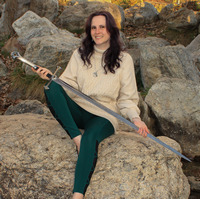
Ashley N.Y. Sheesley is an aroace and disabled author, scientist, animal lover, and a big fan of all things fantasy. In fact, she is only a scientist because she can’t figure out how to be a wizard in real life. She lives with her husband and her small army of animals—a bearded dragon, a bunny, and three cats. Her writing can be found in Artifice & Access: A Disability in Fantasy Anthology, Why Aren’t You Dead Yet?: A Disability in Dystopia Anthology, and with her award-winning debut YA contemporary fantasy, Child of the Dragon from Inked in Gray Press, the first book in the Pact of the Ancients series.
She is represented by Kaitlyn Katsoupis at Belcastro Agency.
Website ~ Bluesky ~ Instagram ~ Threads
My thanks to The Book Bloggers’ Novel of the Year Award for the invitation to participate in this tour and the materials they provided.
I’m very pleased today to welcome The BBNYA 2026 Semi-Finalist Spotlight Tour for KP Roberson’s Awakening! This book made it to the semi-finals, so you know there’s something good going on–but before getting to this Spotlight, let’s start with a word about BBNYA.
BBNYA is a yearly competition where book bloggers from all over the world read and score books written by indie authors, ending with 15 finalists (18 in 2026) and one overall winner.
If you want some more information about BBNYA, check out the BBNYA Website https://www.bbnya.com/ or take a peek over on Twitter @BBNYA_Official.
Title: Awakening by KP Roberson
Series: Between the Birches
Genre: Horror, Contemporary Fiction, Supernatural Occult
Age Category: New Adult
Format: Hardcover, Paperback
Length: 286 pg.
Publication Date: July 11, 2025
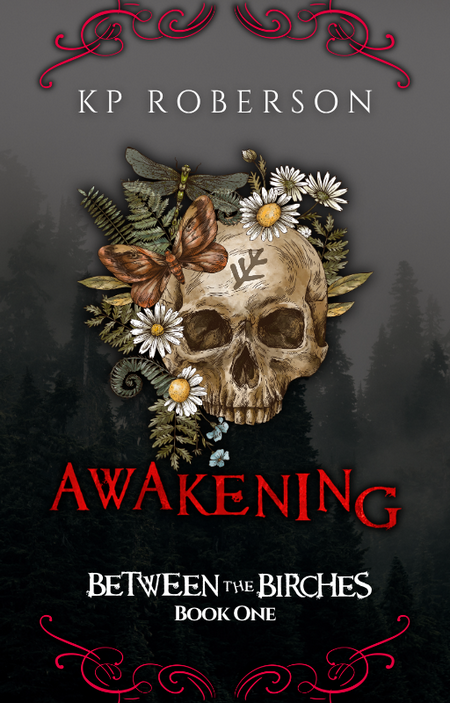
STAY ON THE PATH, TRUST NO ONE BUT YOURSELF, AND BEWARE OF NIGHTMARES LURKING IN THE SHADOWS
Beneath the rolling hills of North Carolina lies an ancient evil, shackled for a millennium, and growing impatient for freedom. People have long forgotten the rule of magic and the guardians who contained his destruction, but the nightmares from their dreams hide in dark corners, very real and very much willing to do their master’s dark bidding.
For Beth’s 25th birthday, her husband and their best friend promised her a relaxing hike at their favorite spot on the Appalachian Trail. After the sun sets, the woods where Beth hoped to find peace turn sinister with talks of death cultists, witches, and interdimensional beings not native to this planet. If this wasn’t enough to shatter her trust foundations, Beth learns her role in this messed up weekend. She must find the courage to let go of her attachments and escape before the forest keeps her for good.
What is the opening line? She’d been running for ages.
What’s a fun fact about the book? The three MCs represent part of my journey from Christianity to Paganism.
What food or drink pairs best with the book? Coffee and kettle-cooked chips; pizza, wings, and beer; or trail mix and bottled water.
Amazon Canada ~ Amazon US ~ Amazon UK ~ Bookshop.org ~ Goodreads ~ The Story Graph
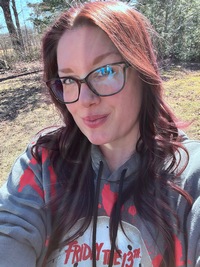
K. P. Roberson is a Georgia native living in the southern Appalachian Mountains. She lives with her very handsome and nerdy spouse, their two teenage spawn, and a very rotund cat who answers to ‘Kitty.’
She loves science fiction, fantasy, thriller, romance, and horror stories, especially if they are character driven. Her writings align with her tastes. She has also composed Stardew Valley fanfiction on Archive of Our Own. When not pounding away at her keyboard with a string of illicit words, she enjoys movies, music, reading, gardening, and crocheting…which explains her love of weaving a good tale. She is currently working on the finale of her Between the Birches trilogy, Zenith.
My thanks to The Book Bloggers’ Novel of the Year Award for the invitation to participate in this tour and the materials they provided.
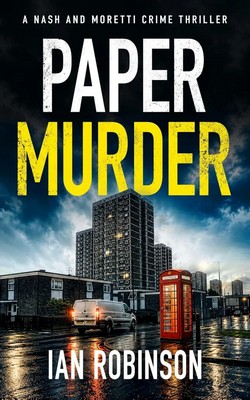 Paper Murder
by Ian Robinson
Series: DI Nash and DS Moretti, #5
Publisher: The Book Folks
Publication Date: July 16, 2026
Format: Paperback
Length: 211 pg.
Read Date: October 6, 2026
Nash and Moretti, fresh from losing a case in court (a case, they knew needed some more work before taking to trial, but didn’t get the chance to do so), are called to the scene of a murder. The crime scene is carefully composed, for lack of a better word, the body was posed, there were origami pieces left by the hands—it has all the marks of someone who took their time, wasn’t concerned about being interrupted or overheard, and very likely left little to nothing for the SOCO folks to pick up on.
If that wasn’t bad enough, the victim is the defendant who walked away free that day. The pressure—and maybe some suspicion is coming their way.
And then another body shows up with the same pose and origami shows up. This one is also a recently freed criminal—tied to the same organized crime family.
So they’ve got a vigilante targeting one group—or someone from a competitor posing as a vigilante. Either way, if something doesn’t happen soon, the criminals are going to start their own investigation—and they’re not going to be nice and respectful of rights or anything as they go about it.
I picked this up because it’s an Ian Robinson book, and I will read anything this man puts out. Also, I’ve enjoyed the Nash and Moretti thrillers up to this point, and would’ve given it a shot regardless of the author.
I kept at it for the usual reasons: I wanted to find out who the killer was—and more importantly, how Nash and Moretti figured it out, and how they caught (presumably) the killer.
If anything, Paper Murder is about limits. These detectives have limits—the other teams of police they interact with have limits, the people in the killer’s life can only do so much, too. Some of these are limits of budget, some are of time, some are related to the ability to do the same kind of soul-crushing job day after day.
Some of these, like budgets, are easy to figure out and stay within (even when you don’t want to). Others will sneak up on a person unaware—the trick is to find them and do something to prevent hitting the limit too hard—or sailing past it to your own detriment.
Nash and Moretti both have to reckon with—and respond to—the limits of what they, as people, can do. The series has been pointing at this for awhile, but Robinson underlines it in bold this time.
This novel delivered just what you want. Some odd murders, just spooky enough to get your attention—not so horrific that you want to turn away. A calling card from the killer you just have to pay attention to. A twisty way for solid police work to find the answers, a couple of lucky breaks along the way, and a very satisfying conclusion.
There’s at least one point, but I think it’s two (I only wrote one down), where the police state something as a working theory and/or fact that hadn’t been brought up before. Just out of the blue, “where’d you get that idea in the first place? And when did the team decide to go with it?” Yes, the theory/fact pushed the story in the right direction, but it felt like Robinson cut a conversation or two along the way—and for a book that seems so good at procedure, jumping a few steps feels out of character. Did this ruin anything for me? No. Did it take me out of the scene and make me go back to check and see if I missed something? Yes.
There’s some solid character work here, if I had to nitpick—there’s not enough of Nash and Moretti together, more of them running around on their own (particularly Moretti), or with other detectives from their team or others. One of the keys to this series for me has been the two of them, and while I understand the choices behind separating them as much as they were, it did diminish my experience a bit.
Solid British police procedural work. If you haven’t taken a ride with Nash and Moretti yet, there’s no reason this can’t be your first, it works fine as an entry point. If you’ve dabbled in this world before, you know what to expect—and you’ll get it. A good mystery that feels authentic as anything out there. I recommend it.
I’m very pleased today to welcome The BBNYA 2026 Semi-Finalist Spotlight Tour for Emma Bradley’s An Absence of Artificers! This book made it to the semi-finals, so you know there’s something good going on–but before getting to this Spotlight, let’s start with a word about BBNYA.
BBNYA is a yearly competition where book bloggers from all over the world read and score books written by indie authors, ending with 15 finalists (18 in 2026) and one overall winner.
If you want some more information about BBNYA, check out the BBNYA Website https://www.bbnya.com/ or take a peek over on Twitter @BBNYA_Official.
Title: An Absence of Artificers by Emma Bradley
Series: The Citadel Of Souls
Genre: Fantasy, Romance
Age Category: Young Adult
Format: Paperback, eBook
Length: 310 pg.
Publication Date: December 6, 2024
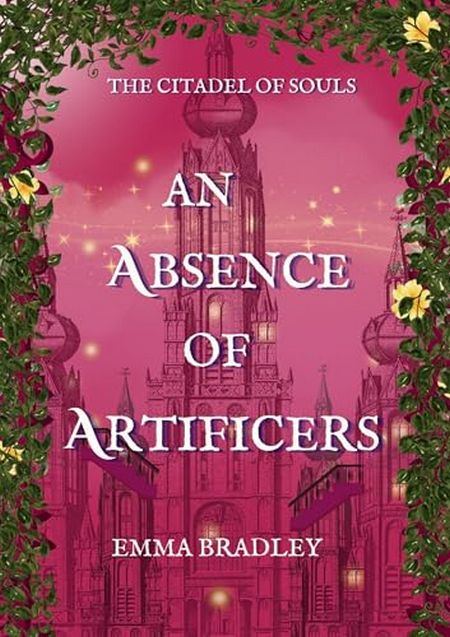
Workshop owner by day and spy for the Menagerie by night, Molly dreams of swapping the Faerie citadel for the wider realms of Faerie.
The citadel isn’t safe and escaping it is rare, so when one of the recently missing Fae from the Artificers’ Guild turns up dead, Molly is determined to dig right to the core of the rot infesting her home.
But in a self-contained city where the enemy knows all the same routes she does, it won’t be long before they’re hunting her in return.
What is the opening line? The middle-aged woman slumped crying over her desk definitely didn’t abduct her husband.
What’s a fun fact about the book? Talie was originally meant to be an outright villain but she grew on me so much throughout edits that I had to change the arc to keep her.
What food or drink pairs best with the book? The closest thing to a meat pocket (nicer than it sounds I promise) is probably a Cornish pasty, so one of those with some berry juice
What music pairs best with the book? I was going through an Einaudi phase while writing it so I always associate his music with certain scenes. That or Linkin Park.
Amazon Canada ~ Amazon US ~ Amazon UK ~ Bookshop.org ~ Goodreads ~ The Story Graph
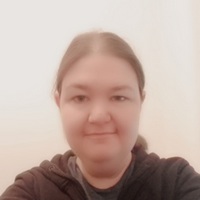
Emma lives on the UK south coast with her plant collection and a very lazy black Labrador who occasionally condescends to take her out for a walk. Aside from creative writing studies, an addiction to cereal and spending far too much time procrastinating on social media, Emma is still waiting for the arrival of her unicorn. Or a tank, she’s not fussy.
Website ~ Bluesky ~ Instagram ~ Twitter
My thanks to The Book Bloggers’ Novel of the Year Award for the invitation to participate in this tour and the materials they provided.
Powered by WordPress & Theme by Anders Norén